AFA Advisory Group - Concern #2 - Dissenting Opinions & Dispute Resolution
AFA Advisory Group - Concern #2 - Dissenting Opinions & Dispute Resolution
AFA Advisory Group - Concern #2 - Dissenting Opinions & Dispute Resolution
|
February 15, 2007 At the February 12th-13th meeting, my concern over "5.3.15 Dispute Resolution Mechanism" was recognized and appropriate corrections to the Terms of Reference were made. There was no contention over this, as its inconsistency with changes already made to "5.3.10 Decision Making Methods" was recognized by the facilitators as simply having been an oversight. The issue of the Terms of Reference's adequate recognition of dissenting opinions has now been resolved to my satisfaction.January 14, 2007 At the January 8th-9th meeting, the changes to the Terms of Reference initially described in the Dec. 26th content (below) were received and accepted. However, modification of section "5.3.15 Dispute Resolution Mechanism" , to comply with section "5.3.10 Decision Making Methods" ... If full consensus can still not be achieved, final decision-making power lies with the General Manager. The decision and reasons for it will be reported to the advisory group. Lack of consensus will be noted in the SFM Plan with a brief explanation. Details of dissenting opinions will be recorded in the minutes of the Advisory Group Meetings., did not occur. I'll be emailing the AFA and KBM toward having this apparent oversight corrected. Other than this one discrepancy, it appears that dissenting opinions will be adequately recognized. If such recognition is ever considered by a member to be inadequate, there is always the option for dissenting member(s) to publish a dissenting opinion outside of the official context. December 26, 2006 On December 5th, a revision of the Forest Certification Advisory Group Terms of Reference (based on input from the November meeting) was emailed out to advisory group members. It's section entitled Decision Making Methods included changes pertaining to both dissenting opinions and dispute resolution. The section "5.3.10 Decision Making Methods" which had previously caused concern now has its bottom paragraph changed to read ... If consensus cannot be obtained, the group will be polled to see if at least 2/3 of the members present can agree with the decision. Varying opinions will be recorded and forwarded to the General Manager for action. Major outstanding issues will be revisited following the advice of the General Manager and consensus will be re-attempted. If full consensus can still not be achieved, final decision-making power lies with the General Manager. The decision and reasons for it will be reported to the advisory group. Lack of consensus will be noted in the SFM Plan with a brief explanation. Details of dissenting opinions will be recorded in the minutes of the Advisory Group Meetings. The last two sentences appear to acknowledge that any decision by the General Manager prevailing without a full consensus of opinion by those group members present, will have its lack of consensus and a brief explanation included in the Sustainable Forest Management Plan. Details of dissenting opinions will be recorded in the minutes of the Advisory Group Meetings.
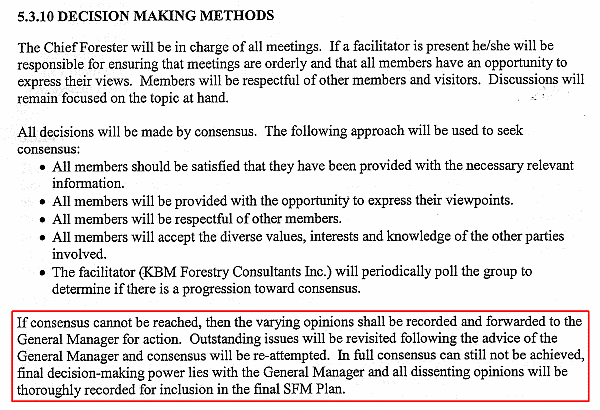
For consistency, it is also crucial that section "5.3.15 Dispute Resolution Mechanism" must have its last sentence changed from ... If full consensus can still not be achieved, final decision-making power lies with the General Manager and all dissenting opinions will be recorded for inclusion in the minutes. to read ... If full consensus can still not be achieved, final decision-making power lies with the General Manager. The decision and reasons for it will be reported to the advisory group. Lack of consensus will be noted in the SFM Plan with a brief explanation. Details of dissenting opinions will be recorded in the minutes of the Advisory Group Meetings. These developments appears to be a compromise between October's original, open passage and November's revised, restrictive passage. While this latest version doesn't provide a full measure of accountability and transparency, it appears to be generally acceptable. However, my acceptance of it hinges on the minutes of the meetings including full details of dissenting opinions and on the resulting minutes of the meetings being fully accessible in the public record (and being so stated in both sections 5.3.10 and 5.3.15) . Otherwise, accountability and transparency would not be achieved. November 23, 2006 Dissenting Opinions In the original (October) Terms of Reference, it was clearly stated that all dissenting opinions would be recorded for inclusion in the final SFM Plan (see the red-framed area below).
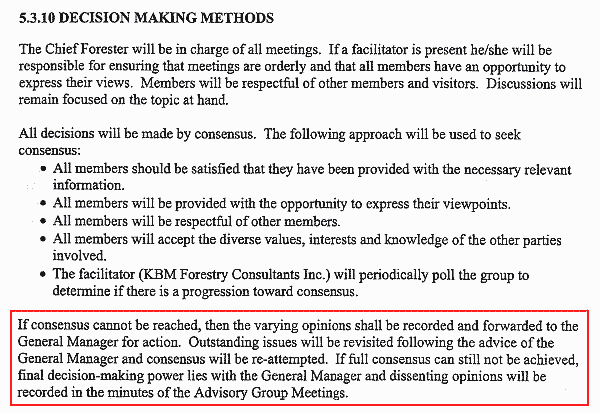
However, the October session's presenter argued that this was improper and that dissenting opinions should only appear in the minutes. At the time, counter opinions were voiced that dissenting opinions should be actually recorded in the final SFM Plan. The issue appeared to be unresolved. But when revised Terms of Reference were distributed at the November meeting, they stated only that all dissenting opinions would be recorded in the minutes (see the red-framed area below). It struck me as ironic that the minutes of the October meeting only made generalized reference to the dissenting opinions on this issue, and didn't describe the issue as having gained consensus (see the red-framed area below). Dispute Resolution
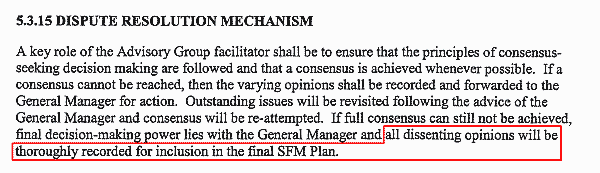
In the original (October) Terms of Reference, the issue of Dispute Resolution was also clearly stated that all dissenting opinions would be recorded for inclusion in the final SFM Plan (see the red-framed area below). The presenter's argument that dissenting opinions should only appear in the minutes held sway over the group to some degree. When revised Terms of Reference were distributed at the November meeting, they again stated in this section only that all dissenting opinions would be recorded in the minutes (see the red-framed area below). The minutes of the October meeting simply stated that "dispute resolution" would be entered in the minutes .. not that any of the dissenting opinions would be detailed in the minutes (see the red-framed area below).
The Canadian Standards Association's own Z809-02 doesn't give any firm guidelines. Rather, it concentrates on building consensus and resolving disputes. However, I've had occasion to read a few other certification-process "Terms of Reference". I haven't found any where dissenting opinions are relegated in generalized form to the minutes of meetings. Rather, I've found the following to be typical ... |