 Introduction to the Fishing Section Introduction to the Fishing Section |
| Introduction to the Fishing Section |
|
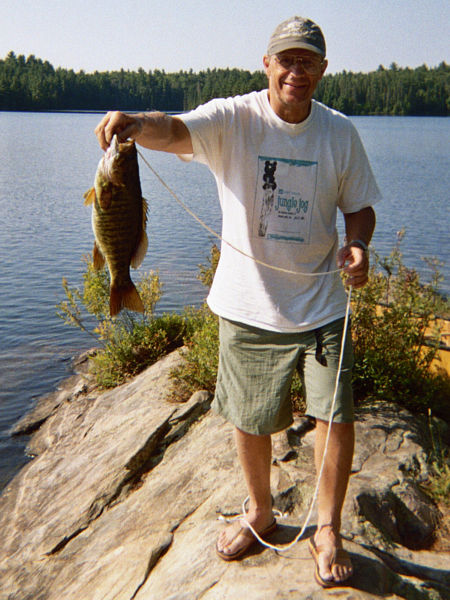
Back in 2006, we had a fishing contest on Algonquin Adventures. However, while it was exciting, some of the fish were being subject to unavoidably damaging treatment prior to their release back into the water. The very process of laying the measuring tape along the fish's lengths (for their photos) necessitated laying them down either on the floor of the canoe or on the ground. It became evident to me that despite being eventually released, some of these fish's skin were getting both dried-out and abraded ... two conditions that negatively impact on their survivability upon release. Trout skin is extremely delicate in this respect. I don't fault anyone for the treatment of the fish. If anything, I feel bad that I hadn't anticipated the effects that would happen to the fishes' skin. Starting in 2007, Algonquin Adventures switched to "Look What I Caught" photo content. No measuring is required. In fact, it will be required that the "brag-photos" show the fish either still attached to the hook and line or properly supported. It is hoped that the brief photo-taking session will minimally impact on the fishes' survival when released. In practising successful "catch-and-release", deep-dip nylon/cotton landing nets should be avoided, as these materials can abrade and harm trouts' skins. However, this request doesn't preclude catch-of-the-day shore meals! It's just that when we "catch-and-release", the fish deserve the best chance to survive. Over time, we've also developed the policy, regarding trout, of not giving away "hot spot" locations .. whether by identifying exact points, bays, or even smaller lakes themselves. So, when you submit a "Look What I Caught" photo, please supply the following caption info ... the catcher's name, the date, the general location, any "lure and tackle" info you wish to share, whether "caught-and-released" or "enjoyed as a meal", and any other general info. Please email submissions to canoe@algonquinadventures.com. If you decide to post your "Look What I Caught" photo on the forum, but also want it added to this section of the website, please include a notation on your forum posting to that effect .. such as "Editor: Please add to website Fishing Section" .. and you can follow-up with additional infomation via email. After 2007, this section fell out of use. However, starting this spring, its being "jump-started" with encouragements to participate on the website forum. Watch for new "2010" additions to this section's side menu! Maintaining a high percentage of catch/release is especially important with lakers/brookies due to their slow growing season, limited numbers, shrinking and sensitive habitat, increased fishing pressure, etc. Despite our best efforts though there's always a percentage of released fish that don't survive, unfortunately a drawback to the sport (as it stands now anyway). To help improve the survival odds here's a list of standard release techniques to employ: 1. Keep the fish in the water as much as possible and handle them gently. |