|
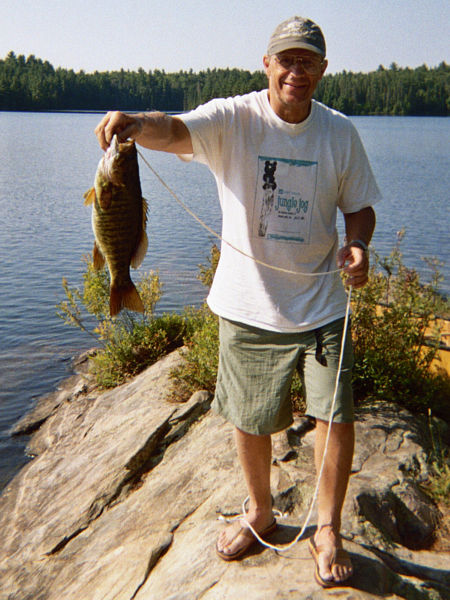
Back in 2006, we had a fishing contest on AlgonquinAdventures.com . However, while it was exciting, some of the fish were being subject to unavoidably damaging treatment prior to their release back into the water. The very process of laying the measuring tape along the fish's lengths (for their photos) necessitated laying them down either on the floor of the canoe or on the ground. It became evident that despite being eventually released, some of these fish's skin were getting both dried-out and abraded ... two conditions that negatively impact on their survivability upon release. Trout skin is extremely delicate in this respect. I don't fault anyone for the treatment of the fish. If anything, I feel bad that I hadn't anticipated the effects that would happen to the fishes' skin. Starting in 2007, Algonquin Adventures switched to "Look What I Caught" photo content. No measuring is required. In fact, it will be required that the "brag-photos" show the fish either still attached to the hook and line or properly supported. It is hoped that the brief photo-taking session will minimally impact on the fishes' survival when released. In practising successful "catch-and-release", deep-dip nylon/cotton landing nets should be avoided, as these materials can abrade and harm trouts' skins. However, this request doesn't preclude catch-of-the-day shore meals! It's just that when we "catch-and-release", the fish deserve the best chance to survive. Over time, we've also developed the policy, of not giving away "hot spot" locations .. whether by identifying exact points, bays, or even smaller lakes themselves. So, when you submit a "Look What I Caught" photo, please supply the following caption info ... the catcher's name, the date, the general location, any "lure and tackle" info you wish to share, whether "caught-and-released" or "enjoyed as a meal", and any other general info. Please email submissions to canoe@algonquinadventures.com. If you decide to post your "Look What I Caught" photo on the forum, but also want it added to this section of the website, please include a notation on your forum posting to that effect .. such as "Editor: Please add to website Fishing Section" .. and you can follow-up with additional infomation via email. After 2007, this section fell out of use and got stuck into the archives. Stephen Molson posted the following "catch-and-release" comments and photo on the website forum ( www.network54.com/Forum/352882 ). They are certainly worth repeating here ...
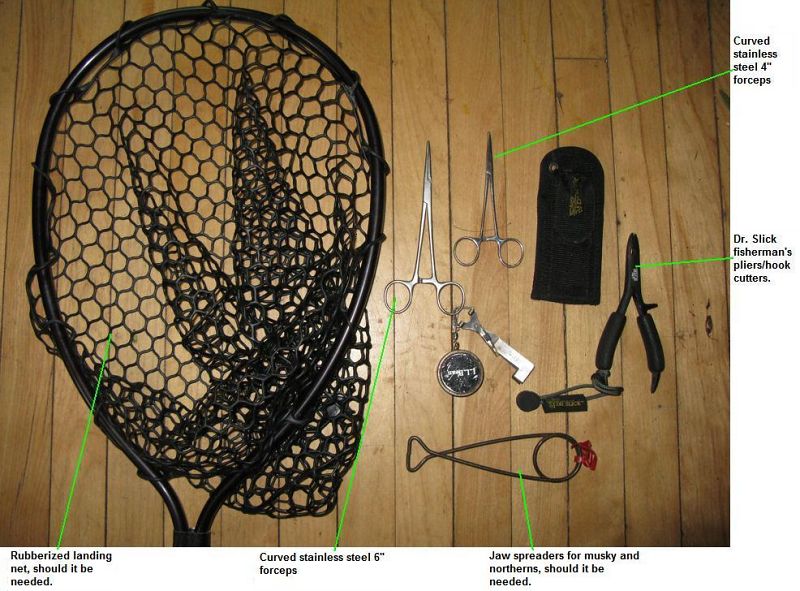
Maintaining a high percentage of catch/release is especially important with lakers/brookies due to their slow growing season, limited numbers, shrinking and sensitive habitat, increased fishing pressure, etc. Despite our best efforts though there's always a percentage of released fish that don't survive, unfortunately a drawback to the sport (as it stands now anyway). To help improve the survival odds here's a list of standard release techniques to employ: 1. Keep the fish in the water as much as possible and handle them gently. Jaw spreader is only used on Northerns and Muskie and when needed (e.g fish deeply hooked and/or she keeps her jaws tight). Keep constant pressure on the jaw spreader's two wire arms on the smaller northerns/muskie ( less than 3 pds) so it does not extend the jaws to the full extent (e.g. not too forceful which will reduce injury). I never use the standard 'pliers' to remove the hook - imo even needle nose ones are too thick, clunky and cumbersome for this function (e.g. tearing palate flesh, causing tissue damage/blocking view). I use one of the two pairs of surgical forceps (depending on fish size and hook location), available from many fishing/outfitters stores now (or, like those shown, your fave medical supplies source). The rubberized landing net is new for me this year and will be used as conditions/fish species dictate. Otherwise a wet hand(s) is all I used in the past from the canoe for cradling, immobilizing, handling fish. Nylon/Cotton nets should not be used, irregardless of whether they are knotless or not (abrasive and hook-snagging respectively).
There are 'fish grabbers' available from Berkley and other sources that may be something to consider for managing those toothy critters (Musky/Northerns) at boatside -http://tinyurl.com/fishgrabbers . I would never recommend lifting a large fish from the water with these though. The pliers shown )http://www.drslick.com/) are used for cutting hooks off, bending hooks, removing hooks from humans/animals should it ever be required and/or forcing barbs down should the target waters have barbless-only regulations. - Stephen Molson |